The Bottom Line
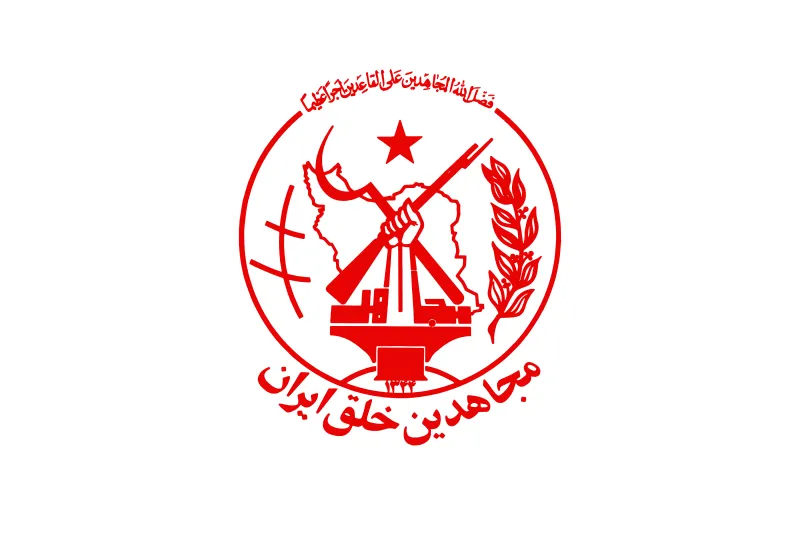
- A new (https://crsreports.congress.gov/product/pdf/R/R48433) from the Congressional Research Service (CRS) details the MEK’s problematic history and its current lobbying efforts, including:

The organization was founded on extremist ideologies combining Marxism with militant Islamism, directly conflicting with U.S. democratic values and interests.

- It has a documented history of violence and terrorism, including assassinations of American personnel in the 1970s. Historically, the MEK actively supported Ayatollah Khomeini's rise to power and endorsed the 1979 U.S. Embassy hostage crisis.

- The organization functions under a highly coercive, cult-like structure that enforces strict obedience to leader Maryam Rajavi through physical, psychological, and financial coercion. This structure facilitates extensive lobbying campaigns aimed at deceitfully legitimizing Rajavi's leadership internationally, despite minimal popular support among Iranians domestically and abroad.

- U.S. officials who support the MEK claim their goal is to promote democracy and foster the emergence of a new, representative government in Iran. Yet aligning with the MEK directly undermines this objective. The group has garnered an intensely negative perception among Iranians, who view the MEK as terrorists. Backing the MEK discourages Iranians from pursuing genuine democratic change.
Background
- (https://crsreports.congress.gov/product/pdf/R/R48433) in the early 1960s by radical leftist Iranian students, the MEK integrated revolutionary Marxist doctrine with militant Islamic principles.

- Initially opposed to Shah Mohammad Reza Pahlavi’s regime, the MEK carried out violent (https://crsreports.congress.gov/product/pdf/R/R48433)designed to destabilize the Iranian government, significantly impacting U.S. interests:

(https://history.state.gov/historicaldocuments/frus1969-76v27/d128) American personnel, including the killing of Lt. Col. Louis Lee Hawkins (1973) and two U.S. Air Force officers (1975).

- Increased militant (https://iranprimer.usip.org/blog/2011/aug/23/us-terrorism-report-mek-and-jundallah) between 1973 and 1975, including bombings, street battles, and targeted assassinations.

- The group actively (https://www.theguardian.com/news/2018/nov/09/mek-iran-revolution-regime-trump-rajavi) Ayatollah Khomeini’s rise to power during the Iranian Revolution in 1979 and explicitly endorsed the seizure of the U.S. Embassy and the hostage-taking of American diplomats.

- After losing favor with Khomeini, the MEK launched attacks against Iranian officials, including a deadly 1981 (https://iranprimer.usip.org/blog/2011/aug/23/us-terrorism-report-mek-and-jundallah) that killed Iran’s Chief Justice and numerous officials.

- Following severe (https://crsreports.congress.gov/product/pdf/R/R48433), MEK leadership, including Massoud Rajavi, fled Iran in 1981, establishing a base initially in France, later relocating to Iraq in 1986 under Saddam Hussein’s patronage.

- During the Iran-Iraq War, Saddam Hussein (https://www.rand.org/pubs/monographs/MG871.html) the MEK with military support to launch aggressive, often suicidal, attacks against Iranian forces.

- After the Iran-Iraq War, the MEK continued terrorist activities internationally, leading the United States to (https://crsreports.congress.gov/product/pdf/R/R48433) the MEK as a Foreign Terrorist Organization (FTO) in 1997, followed by the European Union in 2003.

- The MEK was (https://crsreports.congress.gov/product/pdf/R/R48433) from the U.S. FTO list in 2012 following an intensive lobbying campaign, though the CRS report notes that the State Department continued to express serious concerns regarding the group’s past violent activities and internal practices.
Cult-Like Structure and Lobby in the West
- The MEK operates with a strict, hierarchical, cult-like organizational structure led by Maryam Rajavi, enforced through highly coercive measures.

Members are reportedly (https://nufdiran.org/resources/the-mek-fact-sheet/) to forced family separations, including mandatory divorces. The organization is also particularly cruel to females, conducting hysterectomies on them and repeatedly subjecting them to rape and sexual abuse.

- Numerous credible (https://theintercept.com/2020/03/22/mek-mojahedin-e-khalq-iran/) detail systematic physical and psychological abuses, including allegations of torture and coercive control mechanisms.

- Financial coercion of members funds extensive international (https://www.theguardian.com/world/2012/sep/21/iranian-exiles-lobbyists-delist-mek) campaigns aimed at legitimizing the group’s leadership and securing political support, particularly in the U.S. and Europe.

- These efforts have allowed the MEK to introduce and garner support for dozens of pieces of legislation and pay exorbitant speaker fees to lawmakers to speak at their compound in Albania.

Examples of the speaker fees (https://x.com/khansarinia/status/1879615262393311548) over $400,000 paid to former Vice President Mike Pence and [$180,000](https://x.com/OARichardEngel/status/1000190926365646850) or more to former National Security Advisor John Bolton.

- The MEK’s lobbying efforts also led to the introduction of [H.Res 166](https://www.congress.gov/bill/119th-congress/house-resolution/166/text), a deceiving resolution that claims to express “support for the Iranian people’s desires for a democratic, secular, and nonnuclear Republic of Iran,” but actually endorses Maryam Rajavi and cites her roadmap for change in Iran, which she (https://www.washingtontimes.com/news/2024/dec/11/maryam-rajavi-european-parliament/) to the European Parliament on November 20, 2024. A similar resolution in the 118th Congress garnered 243 cosponsors.

Rajavi deliberately misled lawmakers by asserting that the MEK would lead a transitional government in Iran, ostensibly restoring power to the people within six months. However, under her plan, this so-called transitional government would oversee the formation of a Constituent Assembly. While the MEK would technically be dissolved, it would still maintain control through the assembly, ensuring its continued grip on power.
Why Working With the MEK Hurts U.S. Interests and the Iranian Movement for Freedom
- Engaging with the MEK poses serious risks to U.S. strategic objectives and diplomatic credibility. The ideological foundations of the MEK, combining Marxist and militant Islamist beliefs, are fundamentally incompatible with U.S. principles of democracy, human rights, and capitalism.

Ongoing documented human rights abuses and internal authoritarian practices severely undermine their claim of representing democratic aspirations.

- The U.S. Department of State has explicitly indicated in recent (https://crsreports.congress.gov/product/pdf/R/R48433) that the MEK does not constitute a credible democratic opposition force representing the Iranian people.

The MEK (https://www.congress.gov/crs-product/R48433) on front organizations to solicit contributions from expatriate Iranian communities. This practice has gotten the MEK in trouble in the past, such as when the FBI (https://www.rand.org/content/dam/rand/pubs/monographs/2009/RAND_MG871.pdf) seven MEK supporters for raising over $1 million for a sham charity at LAX.

- Due to their ideology, harsh treatment of their members, historical support for Khomeini’s rise to power, and participation in Saddam Hussein's military operations against Iran, the MEK has little to no popular support within Iran and among the Iranian diaspora.

Polling (https://crsreports.congress.gov/product/pdf/R/R48433) by the Public Affairs Alliance of Iranian Americans further supports this lack of popular support within Iran and the Iranian-American community.
Policy Recommendations
- As stated in NUFDI’s (https://nufdiran.org/maximum-support/) policy initiative, to ensure effectiveness, U.S. policy on Iran should be measured against the principle to “do no harm” to the interests of either the United States or the Iranian people. In particular, Washington should respect Iran’s territorial integrity and national unity and should refrain from engaging with armed groups or former terrorist organizations. Members of Congress should clearly distance themselves from the MEK and avoid legitimizing or engaging with it and affiliated organizations.

- Policymakers should support genuinely democratic, broadly supported representatives within the Iranian diaspora and inside the country, such as Crown Prince Reza Pahlavi, who aligns closely with American democratic principles and maintains (https://gamaan.org/wp-content/uploads/2023/09/GAMAAN-Protests-Survey-English-Report-Final.pdf) among Iranians.